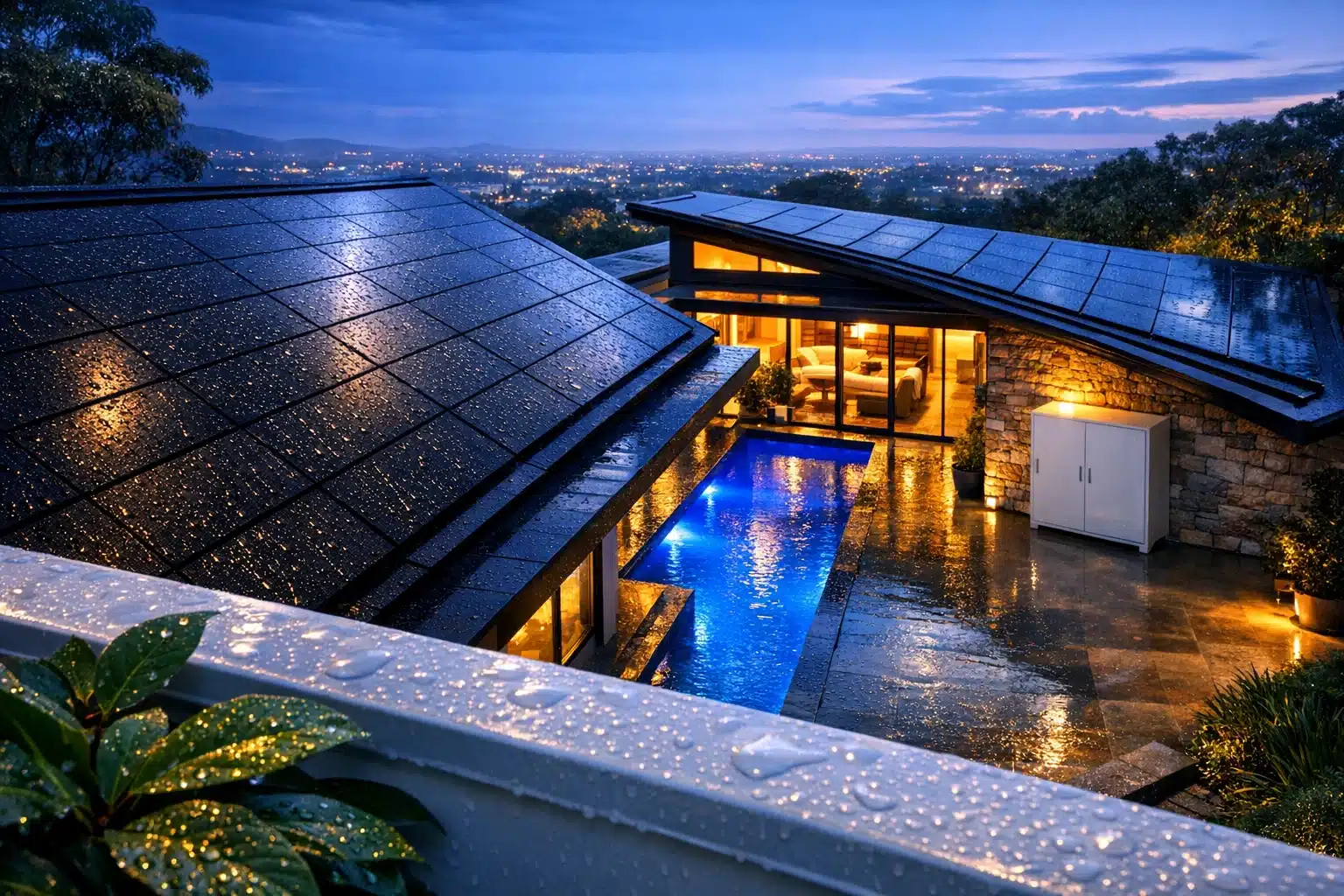
Solar Roof Guide: Solar Tiles, Panels, and Home Integration
Introduction and Article Outline: Why Solar Roofing Matters Now
Solar roofing has moved from a futuristic talking point to a realistic home upgrade, driven by rising electricity prices, better equipment, and broader interest in energy resilience. A modern roof can now do more than shelter a home from rain and sun; it can quietly produce electricity for decades while influencing resale value, design choices, and long-term operating costs. For homeowners, the question is no longer simply whether solar works, but which approach fits the building, the budget, and the way the household actually uses power.
This article follows a clear outline to make that decision easier. First, it explains the fundamentals of solar roofs and the difference between solar panels and solar tiles. Second, it compares appearance, efficiency, durability, and cost so readers can understand trade-offs without relying on marketing language. Third, it looks at home integration, including batteries, inverters, electrical panels, and smart energy controls. Fourth, it covers installation planning, roof suitability, permits, and maintenance. Fifth, it explores financial considerations, incentives, and how to evaluate return over time.
There is a practical reason this topic matters now. In many markets, utility rates have climbed faster than homeowners expected, while solar equipment prices have generally fallen over the past decade, even if local labor and material costs still vary. According to widely reported industry data, residential solar panel systems often carry performance warranties around 25 years, and many systems continue producing usable electricity long after that period. Batteries are also becoming a more common part of the conversation, especially in places where grid outages, time-of-use pricing, or storm risk shape household priorities.
Think of a solar roof as a long-term infrastructure choice disguised as a home improvement project. It touches architecture, electrical engineering, utility policy, and day-to-day comfort all at once. A well-matched system can reduce purchased electricity, improve energy awareness, and make a home more adaptable to future changes such as electric vehicles or heat pumps. A poorly planned system, on the other hand, can leave money on the table or create unnecessary complexity. That is why the details matter, and why comparing tiles, panels, and whole-home integration deserves more than a quick glance at a sales brochure.
Solar Roof Basics: How Solar Tiles and Panels Work
At the core of every solar roof is the same idea: photovoltaic cells convert sunlight into electricity. When sunlight strikes these cells, it energizes electrons and creates direct current electricity. Because homes typically use alternating current electricity, the system needs an inverter to convert that power into a form appliances can use. The concept is elegantly simple, but the way it is built into a roof can vary dramatically between conventional solar panels and solar tiles.
Solar panels are the format most homeowners recognize. They are mounted above an existing roof or attached during reroofing projects using rails and hardware designed to secure them while preserving roof integrity. Panels are generally rectangular, standardized, and available in a range of wattages. Because they have been produced at scale for years, they tend to offer strong efficiency and a relatively favorable cost-per-watt. In plain terms, they are often the most straightforward way to generate the most electricity for the least upfront cost.
Solar tiles, sometimes called solar shingles or building-integrated photovoltaics, take a different path. Instead of sitting on top of the roof, they are built into the roofing surface itself, replacing conventional roofing materials on part or all of the roof. That creates a cleaner architectural look, which is one reason they attract homeowners who care deeply about curb appeal or who live in neighborhoods with stricter design expectations. The trade-off is that solar tiles usually involve more complex installation, more specialized product selection, and often a higher overall project cost.
Both technologies rely on similar electrical components beyond the visible surface:
• Photovoltaic modules that capture sunlight
• Inverters that convert DC to AC power
• Mounting or integration systems that secure the equipment
• Monitoring tools that track production
• Safety shutoff equipment required by code
• Optional battery storage for backup or load shifting
Performance depends on more than product type. Roof orientation, shading, local climate, tilt angle, and available roof area all shape actual output. A south-facing roof in the Northern Hemisphere usually performs well, but east- and west-facing roofs can still be productive depending on electricity usage patterns and utility pricing. Even a highly efficient tile cannot overcome heavy tree shade, and a modestly efficient panel on an unobstructed roof may deliver better real-world results.
The key takeaway is that solar panels and solar tiles are cousins, not opposites. They serve the same basic purpose but fit different priorities. Panels usually win on simplicity and economics. Tiles often win on visual integration. Understanding that distinction early helps homeowners ask better questions before moving to detailed design, budgeting, and installer comparisons.
Solar Tiles vs. Solar Panels: Design, Efficiency, Durability, and Cost
If solar panels are the practical hiking boots of residential solar, solar tiles are the tailored dress shoes: refined, integrated, and appealing in a different way, but not always the first choice for every terrain. Homeowners often begin with appearance, and for good reason. Traditional panels are visible above the roofing surface, while solar tiles are designed to blend with the roofline. On homes where architectural continuity matters, this difference can be decisive.
Yet aesthetics are only one part of the comparison. Efficiency matters because it determines how much electricity can be produced from a given area. Standard residential solar panels often offer higher efficiency than many solar tile products, which means they can generate more power per square foot. That advantage is especially important on smaller roofs where every usable section counts. If a household has high energy demand from air conditioning, electric vehicles, or all-electric heating, panels may make it easier to reach production goals.
Durability is another major consideration. Both systems are built for long service life and exposure to weather, but the practical maintenance experience can differ. Conventional solar panels are a mature product category with a broad installer base, widespread replacement availability, and established service practices. Solar tiles can also be durable, but because they are more specialized, replacement parts, labor, and future service may depend more heavily on manufacturer support and installer expertise in a specific region.
Cost is often where the decision becomes less romantic and more concrete. In many cases, solar panels have a lower installed cost per watt than solar tiles. That does not necessarily mean panels are always the better value. If a homeowner is already planning a full roof replacement and strongly values a unified appearance, the cost gap may feel more reasonable. Still, it is important to separate roofing costs from energy generation costs when comparing quotes.
A balanced comparison often includes these points:
• Solar panels usually deliver stronger cost efficiency
• Solar tiles often provide a more seamless roof appearance
• Panels generally offer higher output for limited roof space
• Tiles may suit premium builds or design-sensitive homes
• Service networks for panels are often broader and easier to access
• Project timelines for tiles can be longer because integration is more specialized
There are also neighborhood and regulatory factors. Some homeowner associations or local design guidelines may be more receptive to integrated roof products than visibly mounted systems, though rules vary and should be checked carefully. In historic districts, visual compatibility may carry special weight. In newer suburban developments, the difference may matter less than expected if panels are installed neatly and positioned on less visible roof planes.
The best choice depends on which compromise feels acceptable. Homeowners focused on maximizing energy output and controlling upfront expense often lean toward panels. Those building a custom home, pursuing a premium architectural finish, or replacing an aging roof may find solar tiles worth a closer look. In either case, the smartest comparison is not just sticker price. It is lifetime value, roof condition, appearance goals, serviceability, and how the system fits the broader life of the home.
Home Integration: Batteries, Inverters, Smart Panels, and Everyday Energy Use
A solar roof works best when it is treated as part of the home’s energy system rather than a stand-alone accessory. That is where integration becomes crucial. The visible modules on the roof get most of the attention, but the real choreography happens between the inverter, the electrical panel, optional battery storage, and the devices that consume electricity throughout the day. When these elements are planned together, a home can become more efficient, more resilient, and easier to manage.
The inverter is the system’s translator. It converts the direct current produced by solar modules into alternating current used by household circuits. Some systems use one central inverter, while others rely on microinverters attached to individual panels. Optimizers are another approach, improving panel-level performance while still using a central inverter. The right choice depends on roof layout, shading conditions, monitoring preferences, and service strategy. Complex roofs with partial shade often benefit from module-level electronics because performance losses in one area are less likely to drag down the entire array.
Battery storage adds another layer of flexibility. Without a battery, many grid-tied solar systems send surplus daytime electricity to the grid and draw electricity back at night. With a battery, some of that daytime energy can be stored for later use. This matters in several situations:
• During outages, if the system is configured for backup power
• In areas with time-of-use utility rates, where evening electricity is more expensive
• For households that want to increase self-consumption of solar energy
• For homes preparing to add electric vehicles or electrified heating loads
It is important to note that not every solar system automatically provides backup during a blackout. Many grid-connected systems shut down for safety unless they include battery storage and the necessary backup configuration. Homeowners who assume solar alone guarantees outage power can be disappointed if this detail is missed during planning.
Smart electrical panels and energy management tools are becoming more relevant as homes add solar, batteries, EV chargers, and heat pumps. These systems can monitor circuit-level use, prioritize critical loads, and provide better insight into when energy is produced and consumed. A refrigerator, lighting circuits, internet equipment, and a few outlets may be designated as essential backup loads, while large electric resistance heaters or pool equipment may be excluded to preserve stored energy. That kind of planning turns backup power from a vague feature into a practical household strategy.
Integration also changes everyday habits. A family that learns to run the dishwasher, charge a vehicle, or pre-cool the house during sunny hours may get more value from the same solar roof. It is a small behavioral shift with surprisingly concrete results. In that sense, solar home integration is not just technology. It is timing, awareness, and design working together under one roof.
Planning, Installation, Maintenance, and Long-Term Ownership
Before a solar roof is installed, the home itself has to pass a quiet but important test: is the roof actually ready for the relationship? A roof nearing the end of its life may not be a good candidate for a new solar array unless reroofing is included in the project. Removing and reinstalling equipment later adds cost, complexity, and inconvenience. This is one reason solar planning should begin with a roof assessment rather than a production estimate alone.
Installers typically evaluate roof age, material type, structure, pitch, orientation, and shading. They may also review the home’s electrical service to determine whether panel upgrades or additional equipment are needed. Local permitting rules, fire setbacks, utility interconnection requirements, and inspection timelines can affect the project schedule. For homeowners, this can be the least glamorous phase, but it is where expensive misunderstandings are prevented.
A thorough planning process usually includes:
• A review of past electricity bills to size the system appropriately
• A site assessment using measurements, shade analysis, and roof mapping
• Structural checks to confirm the roof can support the installation
• Electrical review for service capacity and code compliance
• Permit and utility approval steps
• Clear warranty documentation for equipment and workmanship
Installation length varies. A standard residential panel system may be physically installed in a few days, though the full process from contract to activation often takes longer because of design, permits, and utility approvals. Solar tile projects can take more time, especially if they are combined with roof replacement or custom construction. Homeowners should ask what happens after installation but before permission to operate is granted, since that waiting period can influence expectations.
Maintenance is often modest, but “low maintenance” does not mean “ignore forever.” Panels generally need little more than occasional inspection and, in some environments, periodic cleaning if dust, pollen, or debris noticeably reduces output. Trees may need trimming to control shade as landscapes mature. Monitoring software should be checked from time to time because a fault that goes unnoticed can reduce production for months. In snowy climates, system design should consider snow loads and seasonal coverage; in coastal areas, corrosion resistance may deserve extra attention.
Long-term ownership also means reading warranties carefully. Product warranties, performance warranties, roof warranties, and installer workmanship warranties are not the same thing. Homeowners should know who is responsible for what, and for how long. If the house is sold, they should also understand whether warranties transfer easily to a new owner. A solar roof is not just an installation day event. It is a 20- to 30-year asset decision, and the quality of that decision depends as much on planning and aftercare as on the hardware itself.
Costs, Incentives, Return on Investment, and a Practical Conclusion for Homeowners
The financial side of solar roofing is where enthusiasm meets arithmetic, and that is a healthy place for any major home investment to land. Costs vary by system size, location, roof complexity, product type, labor rates, and whether battery storage is included. In broad terms, standard solar panels are usually more cost-effective than solar tiles on a per-watt basis. Batteries increase total project cost, but they may add value in places with outages, high peak electricity rates, or utility policies that make self-consumption more attractive.
Homeowners should look beyond headline price and examine total value. A lower quote is not automatically a better quote if it uses lower-quality components, weak workmanship coverage, or unrealistic production assumptions. A higher quote is not automatically inflated if it includes panel-level monitoring, service upgrades, premium roofing integration, and stronger support. The real comparison should account for system output, warranty depth, installer reputation, financing terms, and the condition of the existing roof.
In many regions, incentives improve the economics. These may include tax credits, state or local rebates, net metering or export compensation policies, property tax considerations, or utility programs. Because incentive structures change over time, homeowners should verify current rules through official sources rather than relying on outdated marketing pages. It is also wise to understand whether projected savings depend heavily on a utility policy that may evolve in future years.
When evaluating return, consider these factors:
• Current and projected electricity rates
• The household’s annual energy use
• Roof orientation and expected solar production
• Whether a battery provides backup or bill-management value
• Financing interest rates and contract structure
• How long the homeowner expects to stay in the property
Payback periods differ widely, so absolute claims should be treated with caution. Some homeowners value resilience, architectural appearance, and lower carbon impact alongside pure financial return. Others want the shortest possible payback and will prioritize panels over tiles for that reason. Neither approach is wrong. The best system is the one that matches the household’s goals without stretching the budget or relying on unrealistic assumptions.
For homeowners, the practical conclusion is simple: start with the roof, the utility bill, and the life you expect to live in the house over the next decade. If visual integration matters most and budget allows, solar tiles may be worth exploring. If maximizing output and keeping cost under control are the top priorities, conventional panels often make more sense. If outages, electric vehicles, or future electrification are part of the plan, think about batteries and smart energy controls from the beginning, not as an afterthought. Solar roofing is most rewarding when it is chosen as part of a whole-home strategy, with clear eyes, solid numbers, and enough curiosity to ask one more smart question before signing anything.