Drones: A Guide to Modern Aviation Technology Applications
Modern drones sit at the crossroads of aviation, robotics, and data science. What used to require a helicopter crew or weeks of ground work now fits into a trunk and launches in minutes. For professionals in fields as varied as agriculture, construction, energy, and conservation, this shift is not only about new flying machines—it is about informed workflows that transform raw pixels into confident decisions, safely and responsibly.
Outline of this guide:
– Technology fundamentals: airframes, power, sensors, and autonomy
– Civil and commercial use cases that deliver value
– Rules of the sky: regulation, risk, and responsible operations
– From pixels to decisions: sensors, mapping, and analytics
– Operating at scale and the road ahead
How Drones Work: Airframes, Power, Sensors, and Autonomy
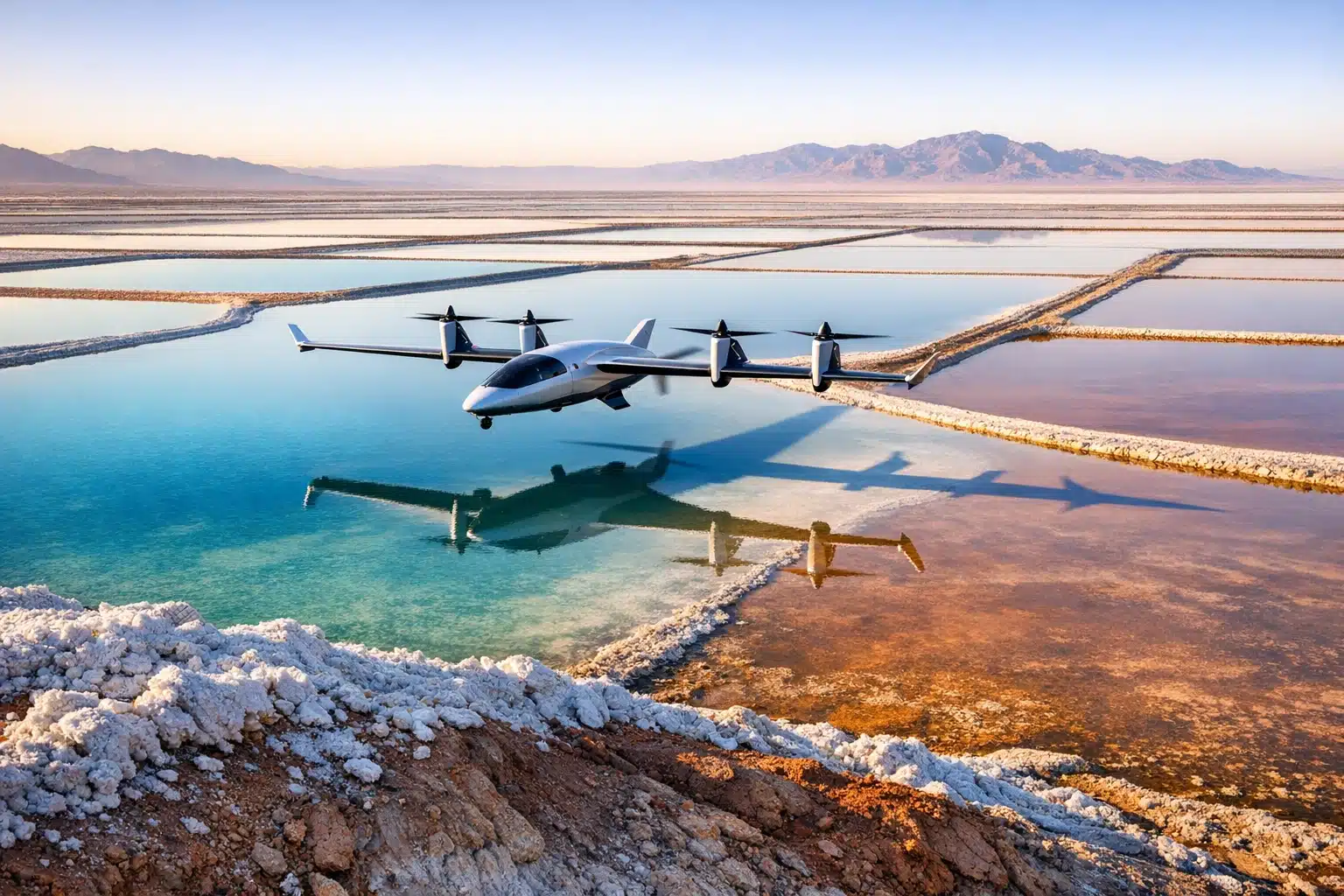
Listen closely to a drone in flight and you’ll hear more than propellers—you’re hearing a compact aviation lab at work. The airframe determines how a platform flies and how long it can stay aloft. Multirotors (quad, hexa, octo) excel at hovering, vertical takeoff, and precise positioning around structures. Fixed‑wing designs trade hover for endurance, gliding efficiently over long distances. Hybrid VTOL models combine vertical lift with winged cruising, offering runway‑free launches and improved range. Choosing among them is a matter of mission fit: tight inspections and confined spaces favor multirotors, while corridor mapping and large‑area surveys lean toward fixed‑wing or VTOL.
Power systems set the mission clock. Most small and mid‑size craft rely on lithium‑ion or lithium‑polymer packs with practical energy densities around 200–260 Wh/kg. In the field, that often translates to 20–40 minutes for multirotors carrying light payloads, 60–180 minutes for efficient fixed‑wings, and anywhere from 30–90 minutes for VTOLs depending on weight and wind. Heavier lift platforms exist, but payload capacity comes with trade‑offs in endurance. Wind tolerance also matters: many workhorse drones handle steady winds near 8–12 m/s, with careful operators reserving high‑gust days for essential flights only.
Sensors and avionics transform a flying camera into a measurement instrument. A modern flight controller fuses data from an inertial measurement unit, barometer, magnetometer, and multi‑constellation GNSS to hold position and follow waypoints. Obstacle awareness varies—some rely on downward ranging for landings, others add forward, rear, and lateral sensing through stereo vision, lidar, or ultrasonic arrays. Navigation links typically use 2.4 GHz or 5.8 GHz spectrum, achieving line‑of‑sight ranges from a few hundred meters to several kilometers under compliant power limits. Emerging cellular options extend coverage in built‑up areas when permitted, and satellite links are appearing for remote operations.
Autonomy comes in layers: – Manual stick control for tight tasks and training – Stabilized GPS modes that resist drift – Waypoint automation for repeatable coverage – Geofencing and return‑to‑home failsafes that guard against link loss or low battery. Redundancy—dual IMUs, diverse compasses, and robust power distribution—adds resilience. The message is simple but consequential: airframe, power, and sensors form a system, and the system only performs as well as its weakest link and the operator’s judgment.
Civil and Commercial Use Cases That Deliver Value
Across industries, drones shine where elevated vantage points, repeatable routes, and rapid data collection reduce time on the ground. In agriculture, multispectral imaging reveals plant vigor and moisture stress invisible to the eye. Growers can apply inputs variably, targeting areas that need help rather than blanketing entire fields. Studies and field reports commonly point to input reductions on the order of 10–20% for well‑managed programs, with yield improvements that depend on crop type and weather. Spraying drones (where allowed) complement scouting, reaching soggy ground or terraced hillsides without compacting soil.
In construction and earthworks, weekly flights produce site contours, stockpile volumes, and progress snapshots with centimeter‑level accuracy when paired with ground control or RTK/PPK workflows. What used to be a day of boots‑on‑the‑ground surveying may compress into a 20–40 minute flight and a few hours of processing, freeing teams to focus on planning and safety. Stakeholders track change over time using consistent flight plans, minimizing disputes and rework. In mining and aggregates, volumetrics inform inventory and reconcile shipments with production, while keeping people off high walls and unstable slopes.
Energy and utilities see similar gains. Inspecting wind turbines, solar arrays, pipelines, and transmission lines from the air reduces climbing hours and improves defect detection. Thermal cameras spot hotspots; high‑resolution RGB highlights cracks, corrosion, or vegetation encroachment. In urban settings, facade inspections reveal spalling or sealant failure without scaffolding. Public safety agencies employ drones for search and disaster assessments, extending the eyes of ground teams and accelerating triage after storms or wildfires, all within strict safety and privacy limits.
Environmental and scientific projects harness the same toolkit to count wildlife, map invasive species, monitor coastal erosion, and quantify canopy recovery after replanting. The value add often combines speed, repeatability, and lower disturbance: aerial passes can cover sensitive habitat quickly with minimal intrusion. Consider where drones add measurable value: – Capturing data where access is risky or slow – Repeating identical paths to compare change – Delivering high‑resolution context to complement ground truth. None of these uses remove the need for experts on site; they shift effort from exposure and guesswork to evidence‑driven planning.
Rules of the Sky: Regulation, Risk, and Responsible Operations
Every successful drone program starts with the same premise: safety and compliance first. While the exact rules vary by country, common threads run through most civil aviation frameworks. Operators generally must register aircraft above a small weight threshold, pass an aeronautical knowledge exam for commercial work, and fly within visual line of sight. Altitude ceilings are commonly set around 120 meters (400 feet) above ground, with additional restrictions near aerodromes, helipads, prisons, and critical infrastructure. Flights over people, at night, or beyond visual line of sight often require additional waivers, risk assessments, or operational categories tailored to ground risk and aircraft class.
Digital remote identification policies are rolling out in many jurisdictions, enabling authorities to see basic aircraft and operator information during a flight. Geofencing data helps pilots avoid sensitive areas, but it does not absolve responsibility; maps can be outdated, and local notices can add temporary restrictions. Weather is another safety pillar: wind, precipitation, and density altitude affect performance, battery efficiency, and controllability. Thorough preflight planning mitigates surprises, ensures sufficient battery reserves, and aligns the team on roles and contingencies.
Practical risk management turns rules into habits. Build a culture that treats every sortie as a learning opportunity. A simple, repeatable workflow helps: – Define the objective and the minimum viable dataset – Check airspace, NOTAMs, and local advisories – Inspect airframe, props, and batteries for wear, swelling, or cracks – Brief crew roles, hand signals, and lost‑link actions – Establish takeoff/landing zones with clear approach paths – Log flights, anomalies, and maintenance in a centralized record. Insurance requirements differ regionally, but liability coverage is a prudent baseline for commercial work.
Privacy and data stewardship deserve equal attention. Capture only what you need, post signage when operating near the public where appropriate, and consider blurring or masking techniques in sensitive contexts. Store flight logs and imagery securely, with defined retention periods and access controls. When in doubt, seek guidance from your aviation authority or a qualified consultant, document your practices, and update them as regulations evolve. Responsible operations are not just about avoiding penalties; they build trust with clients, communities, and regulators alike.
From Pixels to Decisions: Sensors, Mapping, and Analytics
The real payoff from drone missions is not the flight—it’s the information distilled afterward. Start with the right sensor for the question at hand. Standard RGB cameras capture crisp imagery for inspection and photogrammetry; coupled with careful overlap (often 70% frontlap and 80% sidelap), they reconstruct textured 3D models and orthomosaics. Multispectral cameras add narrow bands, such as red edge and near‑infrared, to gauge plant vigor and moisture dynamics. Thermal imagers in the long‑wave infrared range (roughly 8–14 µm) reveal heat patterns for electrical inspections, roof surveys, or search at dusk and dawn. Small LiDAR units emit laser pulses to map terrain through vegetation, generating point clouds that penetrate canopy where photogrammetry struggles.
Resolution matters. A useful rule of thumb for ground sampling distance (GSD) is: GSD ≈ (pixel size × altitude) ÷ focal length. At typical survey altitudes, modern 20 MP sensors can achieve 2–5 cm/pixel when parameters are tuned and motion blur is controlled. RTK/PPK positioning further tightens absolute accuracy, often bringing horizontal and vertical errors into the centimeter range when paired with a stable ground reference. For inspections, motion‑stopping shutter speeds, cross‑lighting passes, and planned standoff distances keep details sharp and interpretable.
Processing transforms raw files into assets teams can use. Photogrammetry stitches images into orthomosaics, digital elevation models, and textured meshes. LiDAR processing filters noise and classifies points by ground, vegetation, and structures. Deliverables often include: – GeoTIFF orthos for mapping backdrops – Contours and breaklines for design workflows – LAS/LAZ point clouds for modeling – Reports highlighting anomalies or measurement change. Choose a pipeline that fits your constraints: edge devices for immediate results on site, or cloud platforms when jobs are batch‑heavy and connectivity allows.
Equally important is data governance. Standardize folder structures, metadata, and naming conventions so files are discoverable months later. Encrypt storage, protect credentials, and strip personally identifiable information where present. Validate outputs with ground checks—targets measured by survey‑grade equipment or known distances—so you know the error bars before decisions ride on them. In the end, the goal is modest but powerful: have the right pixels, at known accuracy, in a format your stakeholders can act on without delay.
Operating at Scale and the Road Ahead
Getting one pilot airborne is straightforward; sustaining a reliable program across teams and sites requires structure. Start with mission profiles: what aircraft sizes, flight times, payloads, and weather limits does your work demand? Map these to a procurement plan that balances endurance, portability, and support. Total cost of ownership includes more than airframes: batteries and chargers, spare props and motors, cases, calibration tools, software licenses, training time, travel, and insurance. Batteries are consumables; expect practical cycle lives on the order of 150–300 cycles when stored and handled properly, with performance tapering in cold or very hot conditions.
Standard operating procedures turn individual skill into organizational capability. Define checklists for preflight, inflight, and postflight actions, and keep maintenance logs visible to crews. Training should blend simulator time, controlled field practice, and scenario drills—lost link, sudden wind shifts, or a diverted landing zone. Measure outcomes with simple KPIs: – Sorties completed per month and on‑time delivery rate – Data turnaround time from landing to usable deliverable – Incident and near‑miss counts with corrective actions – Utilization rates by aircraft and sensor. These metrics reveal where to invest in more training, spare parts, or additional platforms.
Sustainability and community engagement matter as operations grow. Quiet propeller designs and thoughtful scheduling reduce noise impact. Battery stewardship—storage at recommended voltages, temperature‑aware charging, and end‑of‑life recycling—minimizes waste and risk. On the horizon, expect incremental gains rather than miracles: more capable onboard compute that classifies defects in real time, gradual improvements in battery energy density, detect‑and‑avoid sensors that make crowded airspace more manageable, and traffic management services that help deconflict flight plans. Longer‑range operations beyond visual line of sight will expand with proven safety cases, reliable command links, and clear procedures, opening corridors for linear inspections and logistics in sparsely populated areas.
Conclusion: A Practical Flight Plan
If you’re a practitioner, the path forward is clear and grounded: pick missions that match today’s aircraft, document simple procedures, collect only the data you need, and verify accuracy before you scale. Build trust by flying visibly, safely, and with purpose. With solid fundamentals—airframe fit, power planning, sensor choice, and disciplined workflows—drones become dependable tools that shorten timelines, cut exposure, and turn vantage points into evidence your team can act on.