Learn more about table saws
Introduction to Table Saws
Table saws are essential tools for both professional woodworkers and DIY enthusiasts. They stand out due to their versatility and efficiency in making precise cuts. Whether you are crafting furniture or simple home projects, understanding table saws can significantly enhance your work quality and safety.
Types of Table Saws
Table saws come in various types, each designed for specific uses and environments. The most common types include:
- Bench-top Table Saws: These are portable and ideal for small projects. They are lightweight and can be easily moved around, making them suitable for hobbyists.
- Contractor Table Saws: Known for their durability and power, these saws are perfect for larger projects. They offer a balance between portability and power.
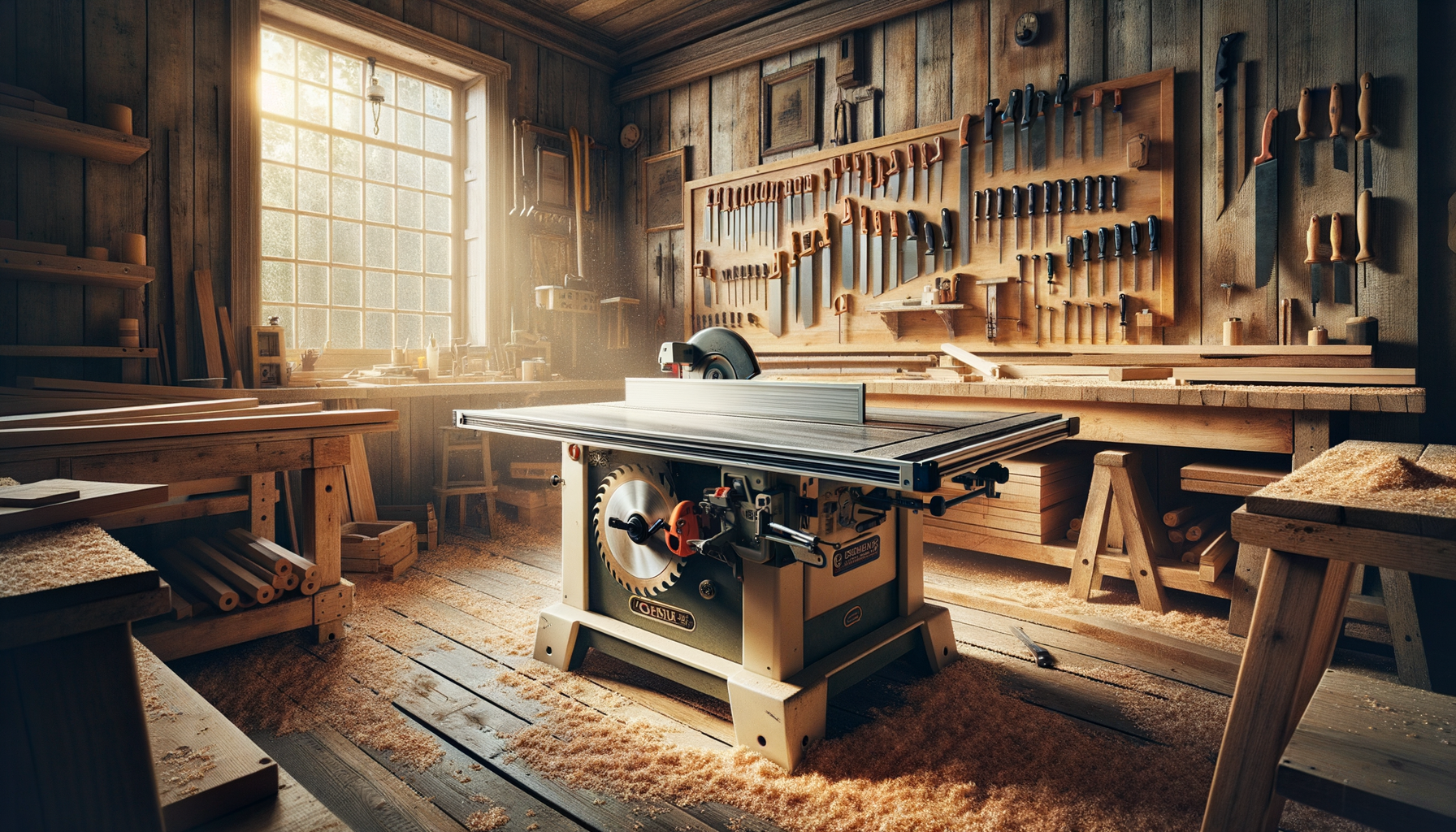
- Cabinet Table Saws: These are heavy, robust machines designed for precision woodworking. They are often used in professional workshops due to their stability and power.
- Hybrid Table Saws: Combining features from both contractor and cabinet saws, hybrid saws offer a good middle-ground for those needing power without a full cabinet saw's size.
Choosing the right type depends on your specific needs and workspace constraints.
Key Features to Consider
When selecting a table saw, several features should be considered to ensure you meet your project needs:
- Blade Size: The most common blade size is 10 inches, but larger blades can make deeper cuts, which might be necessary for certain projects.
- Motor Power: Measured in horsepower, more powerful motors can cut through tougher materials more easily.
- Fence System: A good fence is crucial for making accurate cuts. Look for a table saw with a stable and easy-to-adjust fence.
- Dust Collection: Efficient dust collection systems are important for maintaining a clean workspace and ensuring clear visibility during cutting.
These features can greatly influence the performance and usability of a table saw, so it's wise to prioritize them according to your project requirements.
Safety Measures and Tips
Safety is paramount when using table saws due to the potential hazards involved. Here are some essential safety tips:
- Use a Push Stick: Always use a push stick or similar device to guide wood through the blade, keeping your hands at a safe distance.
- Blade Guard: Ensure the blade guard is in place and functioning correctly to prevent accidental contact with the blade.
- Proper Lighting: Adequate lighting helps you see the cutting line clearly, reducing the risk of mistakes and injuries.
- Wear Protective Gear: Safety goggles and ear protection are essential to protect against flying debris and loud noise.
By following these safety measures, you can minimize risks and ensure a safer working environment.
Maintaining Your Table Saw
Regular maintenance is crucial to keep your table saw in optimal working condition. Here are some maintenance tips:
- Blade Care: Regularly clean and sharpen the blade to ensure smooth and efficient cutting.
- Lubrication: Keep moving parts lubricated to prevent rust and ensure smooth operation.
- Alignment: Check the alignment of the blade and fence regularly to maintain accuracy in cuts.
- Dust Management: Clean the dust collection system frequently to prevent clogging and maintain efficiency.
Consistent maintenance not only prolongs the life of your table saw but also ensures it operates safely and effectively.
Conclusion
Table saws are invaluable tools in any woodworking shop. Understanding their types, features, safety measures, and maintenance can significantly enhance your woodworking experience. By investing time to learn and apply these insights, you ensure not only the quality of your projects but also your safety and the longevity of your equipment.