Learn more about Drones
Drones are no longer futuristic props hovering in science fiction; they are cameras, survey tools, learning platforms, and working machines woven into modern life. A compact aircraft can film a shoreline, inspect a roof, map a field, or help a rescue team see beyond smoke and trees. That versatility makes drones exciting, but it also brings questions about safety, privacy, skill, and cost. This article gives you a practical guide so the technology feels clear, useful, and far less mysterious.
Article outline:
– Section 1 explains what drones are and how they stay in the air.
– Section 2 compares the main drone categories and the jobs they suit best.
– Section 3 looks at how drones are used across industries and everyday life.
– Section 4 covers regulations, safety habits, and privacy concerns.
– Section 5 helps readers choose wisely and understand where drone technology is heading.
1. What a Drone Is and How It Flies
A drone, often called an unmanned aerial vehicle or UAV, is an aircraft that flies without a pilot sitting inside it. That sounds simple, yet the idea combines several technologies that must work together in real time. A modern drone is part miniature aircraft, part sensor platform, and part flying computer. The body holds motors, propellers, a battery, a flight controller, and often a camera. When you lift one off the ground, dozens of tiny calculations begin immediately. The drone must balance thrust, tilt, wind pressure, altitude, and direction hundreds of times per second.
The most common consumer drone is the quadcopter, which uses four motors and four propellers. To hover, the drone creates an upward force equal to its weight. To move forward, backward, or sideways, it changes the speed of individual motors, tilting its body in the chosen direction. That tilt is the key to motion. In a way, a drone does not simply go forward; it leans into the air and lets physics do the rest. This is why stable flight depends on fast sensors and software rather than muscle or intuition.
Several components matter more than most beginners realize:
– The flight controller acts like the brain, processing sensor data and sending commands to the motors.
– The IMU, or inertial measurement unit, tracks motion and orientation.
– GPS helps the drone hold position and return home.
– A barometer estimates altitude.
– Electronic speed controllers regulate motor power with fine precision.
Camera drones often add obstacle sensors, gimbals, and vision systems. A gimbal keeps footage steady by counteracting movement, which is why smooth aerial video can look as if it were filmed on invisible rails. Many popular consumer drones can stay aloft for roughly 20 to 40 minutes per battery, though wind, speed, temperature, and payload all affect real-world endurance. Racing drones are different: they trade convenience for agility, often flying much faster but for shorter periods.
It also helps to understand the difference between manual and assisted flight. Beginner-friendly drones can hover in place, hold altitude, and return automatically if the signal drops. More advanced or stripped-down models demand active pilot input at all times. That distinction matters because people often imagine drones as nearly self-flying devices, when in reality their safety still depends on setup, environment, and pilot judgment. Even the smartest drone cannot repeal bad weather, weak batteries, or careless decisions.
2. Main Types of Drones and How They Compare
Not all drones are built for the same mission, and the differences are more important than the price tag alone. If you compare drones only by camera resolution or maximum speed, you miss the deeper story. Design determines capability. The shape of the airframe, the number of motors, the battery size, and the software stack all influence what a drone can do well and what it will never do efficiently.
The quadcopter is the best-known type because it balances simplicity, stability, and cost. Four motors give enough control for smooth hovering, while the compact frame makes transport easy. This is the format most beginners meet first, especially in aerial photography. Hexacopters and octocopters add more motors, which can improve lifting power and provide some redundancy if one motor fails, but they are usually heavier, more expensive, and less convenient for casual use. These larger multirotor systems are common in specialized filming, industrial lifting, and sensor-heavy work.
Fixed-wing drones are a different species altogether. Instead of hovering, they fly more like airplanes, using wings to generate lift. Because they are aerodynamically efficient, they often stay airborne much longer than multirotors and can cover larger areas. That makes them useful for mapping, surveying, and agriculture. The trade-off is obvious: they usually cannot sit still in the sky to inspect a single point, and they need more space to launch and recover unless they use catapults, nets, or vertical takeoff systems.
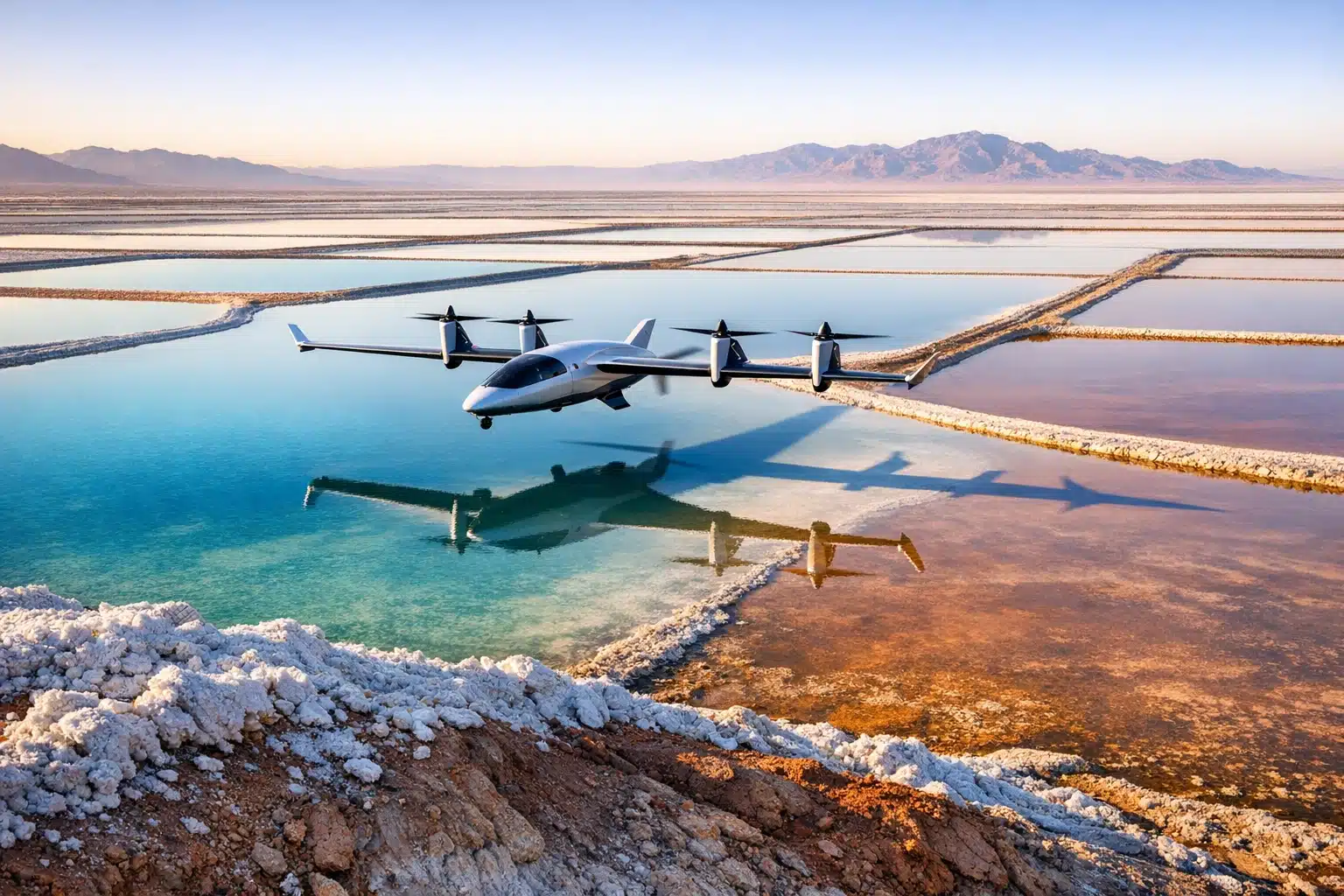
Hybrid VTOL drones try to combine the best of both worlds. VTOL means vertical takeoff and landing. These aircraft can rise like a multirotor, transition into forward flight like a fixed-wing craft, and then land without a runway. In theory, that sounds ideal. In practice, hybrid systems are more complex, often more expensive, and may require careful mission planning. They shine in professional operations where long range matters and the launch site is limited.
Another major category is the FPV drone, short for first-person view. FPV models are built for speed, acrobatics, and immersive piloting, often using goggles that show a live video feed. They are thrilling, responsive, and capable of dramatic footage, but they also demand more skill and concentration than a stabilized camera drone.
When comparing drone categories, most buyers should weigh:
– Flight time versus maneuverability
– Camera quality versus portability
– Ease of use versus pilot control
– Payload capacity versus battery life
– Repairability versus sleek design
The right choice depends on the mission. A real estate photographer may value stable hovering and easy setup. A survey team may prioritize range and mapping accuracy. A hobby pilot may simply want a durable craft that survives beginner mistakes. In other words, there is no universal best drone, only the best fit for a specific kind of work or play.
3. Where Drones Are Used in the Real World
Drones attract attention because they look futuristic, but their real importance comes from something much less flashy: they save time, widen perspective, and reduce risk in tasks that used to be slower, costlier, or more dangerous. In many fields, the value of a drone is not that it flies; it is that it reaches places people should not, cannot, or need not go.
Aerial photography and video remain the most visible use cases. Drones let filmmakers, travel creators, wedding videographers, and small businesses capture shots that once required helicopters, cranes, or large crews. Even a modest camera drone can now produce stabilized overhead footage, reveal landscapes with a sense of scale, and turn a routine scene into something more cinematic. Yet this is only the front porch of the industry.
In agriculture, drones help farmers monitor crop health, check irrigation patterns, estimate plant stress, and map field variability. With multispectral sensors, they can highlight areas that need attention before problems become obvious at ground level. Some agricultural drones are also used for spraying, especially in terrain that is difficult for tractors to access. The practical gain is not magic; it is information delivered earlier and more efficiently.
Construction, mining, and infrastructure inspection have also embraced drones. A drone can survey a site, generate 3D models through photogrammetry, measure stockpiles, and inspect bridges, towers, rooftops, and power lines. Compared with manual climbing or expensive equipment setups, drones can make inspection faster and reduce exposure to hazardous locations. Engineers still need expertise to interpret the results, but the collection process becomes easier and often safer.
Public safety agencies use drones for scene awareness, search operations, and disaster assessment. Fire crews may use thermal cameras to locate hotspots. Rescue teams can scan forests, flood zones, or rough terrain. Police and emergency managers may deploy drones to understand traffic conditions or document accident scenes. The technology does not replace trained responders; it gives them another set of eyes from above, often within minutes.
Scientific and environmental work is another major area. Researchers use drones to monitor coastlines, track erosion, study wildlife from safer distances, and gather data in regions where traditional access is costly or risky. Conservation teams can map habitats, while geologists and ecologists can survey land changes over time with repeatable imagery.
Common applications include:
– Filming and photography
– Mapping and surveying
– Crop monitoring
– Roof and utility inspection
– Emergency response
– Environmental research
– Delivery trials in limited settings
Delivery often dominates headlines, but it remains more restricted than many people assume. Regulations, payload limits, weather, population density, and reliability standards make large-scale deployment challenging. That gap between headlines and routine operations is worth remembering. Drones are already useful not because they promise everything, but because in selected tasks they solve real problems remarkably well.
4. Rules, Safety, Privacy, and Responsible Flying
The excitement of flying a drone can make it feel like a clever gadget, but regulators usually treat it as a real aircraft, even when it fits in a backpack. That is why responsible drone use is not a side topic; it is central to the whole experience. A safe pilot thinks beyond the takeoff point and asks a wider set of questions: Where am I flying, who is nearby, what airspace rules apply, what happens if the battery drops faster than expected, and what rights do other people have in this space?
Regulations differ by country, and sometimes by use case. Many jurisdictions separate recreational flying from commercial operations. Some require registration above certain weight thresholds. Others require pilot tests, certifications, or remote identification features. Because the details change, the safest general advice is straightforward: always check the current rules from your local aviation authority before you fly. Relying on a random forum post is a poor substitute for an official source.
Line of sight is one of the most common safety principles. In many places, pilots are expected to keep the drone within visual line of sight unless they have special approval. This reduces the risk of losing orientation, colliding with obstacles, or entering airspace where other aircraft may be present. Airports, emergency scenes, prisons, military zones, and some urban locations can carry strict restrictions or outright bans.
Privacy is another issue that deserves calm, practical thinking. A drone camera can create anxiety even when the pilot means no harm. People may not know whether they are being filmed, monitored, or simply passed over. Ethical drone use means avoiding intrusive behavior, respecting private property, and understanding that legal permission and social permission are not always the same thing. Good pilots do not just ask, “Can I fly here?” They also ask, “Should I?”
A useful pre-flight routine often includes:
– Checking local airspace and weather
– Inspecting propellers, frame, and battery health
– Confirming GPS lock and home point
– Setting return-to-home altitude carefully
– Keeping a buffer for battery reserve rather than flying until the last percent
Battery safety matters more than newcomers expect. Lithium batteries are powerful, but they need proper charging, storage, and handling. Wind is another underestimated risk. A drone may seem stable near the ground and struggle badly higher up, especially on the return trip.
Responsible flying is ultimately about trust. Every careless flight shapes how neighbors, lawmakers, and property owners view the entire drone community. Fly thoughtfully, and the technology remains useful and welcome. Fly recklessly, and the sky becomes narrower for everyone.
5. Choosing the Right Drone and What the Future Means for You
If you are thinking about buying a drone, the smartest first question is not “What is the most advanced model?” but “What do I actually want to do with it?” That one question can save money, frustration, and the all-too-common experience of owning an impressive device that is wrong for the job. A beginner who wants family travel footage does not need the same machine as a survey professional, an FPV racer, or a farmer managing hundreds of acres.
For first-time buyers, ease of use usually matters more than maximum specifications. Features such as GPS positioning, stable hovering, automatic return-to-home, obstacle sensing, and straightforward app controls can shorten the learning curve. A foldable design is helpful if you plan to carry the drone often. Spare batteries are usually more valuable than chasing an extra feature you may never use. Battery life on paper also deserves skepticism; real-world conditions are rarely as kind as test conditions.
More experienced users may care about sensor size, manual camera controls, low-light performance, wind resistance, interchangeable payloads, or mapping software support. Professionals often evaluate the full workflow rather than the drone alone. They ask whether files are easy to process, whether replacement parts are available, whether the system fits regulatory needs, and whether support and training are dependable. A drone is not just a flying object; it is part of a larger process of data capture, editing, analysis, and maintenance.
When choosing, it helps to compare:
– Purpose: recreation, filming, inspection, mapping, racing, or education
– Budget: aircraft cost, batteries, accessories, insurance, and repairs
– Skill level: assisted flying or fully manual control
– Portability: pocket-sized convenience or field-case robustness
– Upgrade path: can the system grow with your needs?
Looking ahead, drone technology will likely become better at navigation, obstacle avoidance, automation, and data processing. Artificial intelligence is already helping with subject tracking, route planning, and image analysis. Batteries will improve gradually rather than magically, and professional systems will keep expanding into inspection, logistics, and environmental monitoring. At the same time, regulation, privacy expectations, and airspace integration will shape how fast those changes become normal.
For readers who are curious, cautious, or ready to buy, the most useful takeaway is this: drones are neither toys to dismiss nor miracles to romanticize. They are tools with strengths, limits, and responsibilities. If you learn the basics, match the machine to the mission, and fly with good judgment, drones can open up new angles on work, creativity, and exploration. The sky may be wide, but smart choices are what make it truly usable.